


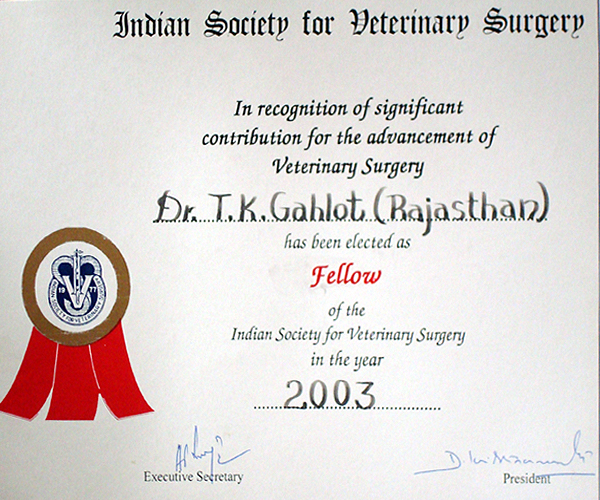
Dr.T.K.Gahlot- A Camel Vet Born on 18 December 1955 in Napasar Village of Bikaner District of Rajasthan State of India Graduated BVSc &AH in 1979, MVSc in Veterinary Surgery and Radiology in 1982 from College of Veterinary and Animal Science, Bikaner, Rajasthan, India did PhD in 1989 from College of Veterinary Sciences, CCS Haryana Agricultural University, Hisar, Haryana, India
How became a CAMEL VET?
Dr.Gahlot had a fascination for camels since birth because he was born in desert land where there were lots of camels around. Then incidently he joined veterinary profession and was distressed to learn that many camels could not be treated properly due to lack of published literature on this desert species. Dr.Gahlot could understand various diseases of camels ever since he was attending the college clinics as a student since 1978. Dr.Gahlot decided to join Masters of Veterinary Science in Veterinary Surgery and Radiology and later chose it as a career.
Innovative Surgeries









Certificate

Recommonded Web Sites
- Cardiothoracic Surgery
- Cardiovascular Diseases
- Ophthalmology
- Dermatology
- General Surgery
- Consultative & Diagnostic Medicine
- Medicine
What our Client's Say:
In convallis venenatis magna, nec interdum ipsum iaculis et. Nulla facilisi. Duis in neque malesuada lectus pellentesque bibendum ac et dui. Curabitur venenatis lacinia pellentesque. Donec dapibus euismod ligula.

Rafael Blasini, MD
Internal Medicine
In convallis venenatis magna, nec interdum ipsum iaculis et. Nulla facilisi. Duis in neque malesuada lectus pellentesque bibendum ac et dui. Curabitur venenatis lacinia pellentesque. Donec dapibus euismod ligula. Maecenas erat diam, tincidunt ut facilisis vitae, vestibulum ut neque. In convallis venenatis magna, nec interdum ipsum iaculis et. Nulla facilisi. Duis in neque malesuada lectus pellentesque bibendum ac et dui. Curabitur venenatis lacinia pellentesque. Donec dapibus euismod ligula. Maecenas erat diam, tincidunt ut facilisis vitae, vestibulum ut neque.

Rafael Blasini, MD
Internal Medicine